Second UK Passport: Who Can Get One and How to Apply
20th November 2026 · Last reviewed 27th November 2026
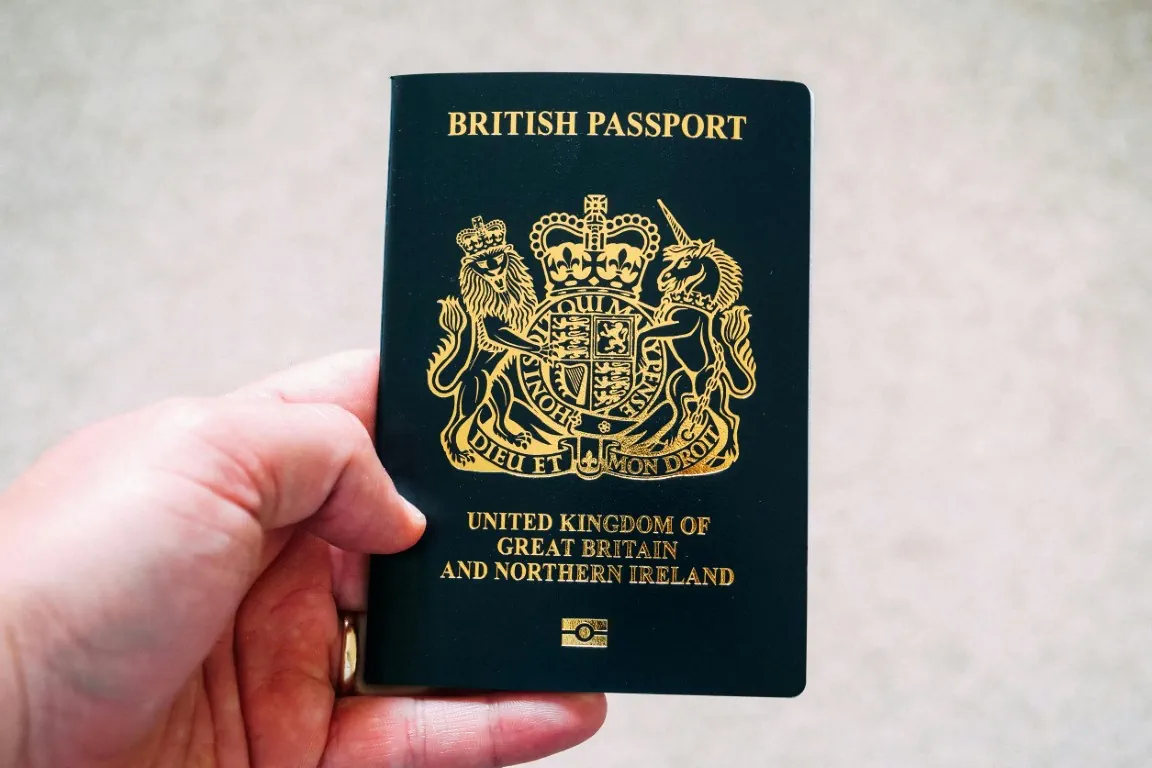
A second UK passport is a real thing, but HM Passport Office (HMPO) treats it as an exception, not an option you can simply tick. You have to show a genuine need. For frequent travellers, the benefit is flexibility: one passport can be with an embassy for a visa while you keep travelling on the other, or two visas for different countries can be processed at the same time. With only one passport, you cannot travel until it comes back.
This guide is about holding two British passports at the same time. If you are a dual national wondering which of your two nationalities' passports to travel on, that is a different question, covered in our guide on which passport a dual citizen should use.
What follows is drawn from HM Passport Office's published staff guidance, Additional passports (version 39.0, published for Home Office staff on 7 September 2026). The guidance itself admits that "The additional passport service is not widely promoted". You apply through the normal GOV.UK passport service, directly with HMPO, and you do not need an agent to do it.
Can I have two British passports?
Yes, if you can prove you need one. The staff guidance opens its entitlement section with the rule: "HM Passport Office has a one passport per person policy. Additional passports are an exception to this policy for those who can prove they genuinely need it."
"Additional passport" is the official term. The guidance notes: "We commonly refer to additional passports as 'second' passports". A third is possible too, but rarer: "If a customer asks for 3 or more valid passports and has a genuine need for them, a higher executive officer (HEO) or someone senior must authorise it."
HMPO says it can issue one when customers:
- "need to get visas to travel on business"
- "travel to incompatible countries (countries with political differences which may prevent travel between them two)"
- "are a frequent traveller"
The guidance also lists the grounds for refusal. HMPO must refuse if "we have concerns with a customer's entitlement, nationality or identity" or if "the customer cannot clearly prove they have a genuine need for one".
Second passport for business travel
This is the case most relevant to people who travel for work, including touring musicians and crew. According to the guidance, HMPO "will issue an additional passport to frequent business travellers and students studying internationally who may need an additional passport so they can":
- "continue travelling for business purposes" and "apply for a visa at the same time"
- continue travelling "while they wait to get a new passport"
- "travel to incompatible countries"
In practice, that covers the person whose passport is lodged with a consulate for a US work visa while they still have European dates to play. Our guides to US visas for UK bands and O-1 and O-2 visas for musicians and crew explain why a passport can be tied up for that kind of application.
Family members can sometimes qualify as well. The guidance says HMPO "may also issue an additional passport to a frequent traveller's partner and dependents or to a person accompanying a student (for example, a parent or carer) on their journey across a border." These are considered "on a case by case basis".
Second passport letter from employer
A business application stands or falls on its supporting letter. The guidance says: "Business customers must send us a letter confirming why they need an additional passport. The letter must be on company headed paper and be":
- "signed and dated within 6 months of the date the application was made"
- from "a senior person within their organisation", "the customer's client" or "the customer themselves"
Even a letter you write yourself must be on headed paper.
HMPO checks that the business is real. Examiners are told to confirm the organisation exists by checking its "official website to make sure the company logo and email domain names, match the details on the letter" and that the "business exists on Companies House".
The signature matters too. "Any requests for an additional passport must have a wet signature unless this guidance tells you it is not needed. This means: we cannot accept these letters by email". Examiners must "not accept a letter that is unsigned or undated". The exceptions to the wet-signature rule are narrow, covering letters from other government departments and airlines.
How to apply for a second UK passport
There is no special form. The guidance says customers can apply "online", "by post" or "in person during a counter appointment", and that "there is no separate application type on the passport issuing system for processing these." Instead:
- For your first second passport, you use the "first time application type, when they already hold one passport and want to apply for their 'first additional passport'".
- To renew or replace a second passport you already hold, you use the "renewal or replacement application type".
You must make the request obvious. The guidance says the customer must "make their requirement clear when they make their application (for example, in person at a public counter or with a covering letter (with a wet signature), unless it meets an exception)", and provide documents showing they are a British national and proving their need.
Do I have to send my current passport?
For a first additional passport, the guidance asks for "their current passport" or "a colour photocopy of their current passport if they need to hold onto it while their application is being processed". It adds that HMPO "may accept a colour copy of the full current passport including all visa pages if the customer explains in a covering letter with a wet ink signature why they cannot send us their passport." That concession is described for frequent business travellers and students, for example where they hold one British passport "which they need to keep with them during the application process".
Why a first second passport cannot be fast-tracked
This is the point that catches out people who leave it late. The guidance says that unless you are in the Armed Forces or have an urgent government business travel need, you "must apply for their first-time additional passport using the standard service. This is because they will not be eligible for the Digital Fast Track or Premium service."
Counter appointments are limited to people who "are renewing or replacing an existing additional passport" and who "meet the criteria for applying for Digital Fast Track or Premium service". The guidance gives no processing time for additional passports, so plan the application well ahead of the visa appointment or tour that creates the need, not in the days before it.
Will HMPO offer a 54-page passport instead?
It may. Before issuing a second passport, examiners must consider whether one is "not needed because they would benefit from the larger, 54 page frequent traveller passport instead". If they think so, the guidance says "you must phone the customer to tell them."
A bigger passport solves a shortage of pages. It does not help if your problem is that the passport is physically at an embassy, so be clear in your covering letter about which problem you have.
Second passport fees
The GOV.UK passport fees page does not list a separate fee for an additional passport. The standard adult fees for an application made in the UK are (verified November 2026):
- Adult standard 34-page passport: £102 online, £115.50 by paper form
- Adult 54-page frequent traveller passport: £116 online, £129.50 by paper form
Fees differ if you apply from outside the UK. GOV.UK says: "You'll pay a different fee if you apply for a passport from another country."
How long a second passport lasts and renewing it
"We normally issue additional passports with full validity but you may consider issuing a restricted validity passport in exceptional circumstances," the guidance says.
Renewal is not automatic. "Customers do not have the right to automatically renew their additional passport." When you renew, you must "tell us why they need it" and "provide us with up to date evidence to show they still need it". A letter that worked five years ago will not carry the next application.
Second passports for incompatible countries
HMPO will consider an additional passport where "a stamp or visa from one country will prevent or cause travel problems in another country or area". The guidance names travel from Israel to Iran, Iraq, Kuwait, Lebanon, Libya, Pakistan, Saudi Arabia, Sudan, Syria and Yemen, and travel between Kosovo and Serbia, among its examples.
It also states that "The UK Government does not encourage customers concealing their travel history in multiple passports". Entry rules are set by the destination country, so check the FCDO travel advice for each country on your route before you travel.
Travelling with two passports
A second passport is a separate document, not a copy. It has its own number and its own pages, and anything issued against one passport stays with that passport.
- Show the passport that holds the visa. A visa sits in, or is linked to, one particular passport. So is an electronic travel authorisation such as the US ESTA, which is tied to your passport number.
- Enter and leave a country on the same passport. Border officers match your exit to your entry, so switching passports mid-trip can cause problems.
- The extra pages are a bonus, not a reason. If running out of pages is your only problem, HMPO is likely to suggest the 54-page passport instead.
- A spare helps if one is lost, but HMPO won't accept that as a reason on its own. If one is lost, report it straight away. It is cancelled once reported.
Where to go from here
Everything above can be done directly with HM Passport Office through GOV.UK. If you would rather have help, our personal applications service covers second passport applications for frequent travellers where eligibility allows, and employers arranging second passports for staff can look at our work travel service. For touring crews juggling passports between visa applications, see tour support, or get in touch.
This is general information drawn from HMPO's published guidance, not legal advice. HMPO decides each application on its own evidence.